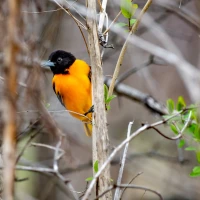
The Orchard Oriole, often overshadowed by the flashier Baltimore Oriole, is an avian gem waiting to be discovered by meticulous birdwatchers and nature enthusiasts alike. With its vibrant plumage and melodious tunes, this lesser-known songbird is a jewel in the crown of North American bird species, beckoning observers to explore the quiet marvels of our natural world.
Ecology and Habitat: Where to Find the Elusive Orchard Oriole
Understanding Orchard Oriole Distribution
The Orchard Oriole (Icterus spurius) graces North America with its presence, predominantly in the warmer months. It breeds across the central and eastern United States, venturing further into Canada, and winters in Central America. Its migratory patterns are a fascinating subject for ornithologists and birders alike.
Preferred Habitats: A Bird’s Utopia
Nestled in open woodlands, orchards, and along riverbanks, Orchard Orioles find solace in areas rich with insect life and fruit. Understanding their habitat preferences is key for conservation efforts and for birdwatchers hoping to catch a glimpse of these striking creatures.
The Bird of Vibrance: Identifying the Orchard Oriole
Male Orchard Oriole: A Kaleidoscope of Color
- Spring Plumage: The adult male is an exquisite blend of black and chestnut, with bold black on the head and back and a burnished chestnut on the underparts and wing coverts.
- Fall Plumage: Come autumn, males molt into a more subdued coloration, echoing the muted earth tones as the season transitions.
Female and Juvenile Identification: Subtle Charms
Unlike their male counterparts, female and juvenile Orchard Orioles wear a more camouflaged attire, with olive-green and yellow hues making them expert at blending into their leafy abodes. These subtle differences are key identifiers for the keen birdwatcher.
The Orchard Oriole’s Melodic Mosaic: Songs and Calls
The Musical Repertoire
Orchard Orioles are virtuosos of song, with males belting out a series of whistles and chatters that are as intricate as they are beautiful. Their calls serve as a beacon for mates and a ward off to potential rivals.
Deciphering the Chorus
The Orchard Oriole’s vocalizations are not just for show; they are a critical part of their social structure. Learning to recognize and distinguish these birds’ songs from other species enhances the birdwatching experience and is vital for accurate data collection.
Breeding Rituals and Nesting Habits: The Orchard Oriole’s Cycle of Life
Courtship and Pair Formation
Orchard Orioles engage in enchanting courtship displays. Males flaunt their vibrant feathers and melodious songs to woo prospective mates, while females assess the suitors’ fitness, with a discerning eye for the strongest genes to pass down to their progeny.
Architectural Marvels: The Nesting Process
- Nest Construction: Females meticulously weave snug nests, creating intricate hanging baskets that cradle future generations.
- Clutch and Care: On average, the female lays 3-6 eggs, with both partners sharing feeding duties until their young are ready to venture forth.
Conservation Status: Safeguarding the Orchard Oriole’s Future
Threats and Protective Measures
Despite being classified as “Least Concern” by the IUCN Red List, the Orchard Oriole faces challenges such as habitat loss and climate change. It is paramount to support conservation efforts to ensure these birds continue to thrive for generations.
The Role of Birdwatchers
Birdwatchers and citizen scientists play a fundamental role in conservation. Recording sightings, participating in bird counts, and fostering a broader public appreciation for avian biodiversity are just some of the ways that enthusiasts contribute to the wellbeing of the Orchard Oriole.
The Birdwatcher’s Toolkit: Best Practices for Observing Orchard Orioles
Essential Gear and Resources
Equip yourself with binoculars, field guides, and birdwatching apps. Staying informed about migration patterns and hotspots increases your chances of a successful sighting.
Ethical Birdwatching: Respect and Preserve
Respect the natural behavior of Orchard Orioles by keeping a comfortable distance and minimizing disturbance. Remember, conservation begins with responsible observation.
In Conclusion: The Orchard Oriole’s Captivating Presence
The Orchard Oriole, with its enchanting songs and bright plumage, is a testament to nature’s resilience and beauty. To the birdwatcher’s trained eye, these songbirds are a source of perpetual wonder, reminding us of the importance of preserving the delicate balance of our ecosystems. As we uncover the secrets of the Orchard Oriole, every sighting becomes a treasured moment, a sign that even the smallest creatures have vast stories to tell.
By fostering awareness and admiration for the Orchard Oriole, we can ensure that this birdwatcher’s jewel continues to illuminate our landscapes and our hearts, a beacon of the wild world awaiting discovery in plain sight.