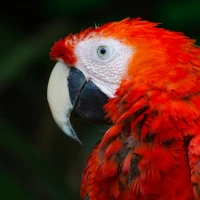
The natural world is a marvel of evolution, a vast array of ecosystems where flora and fauna thrive in exquisite harmony. Amongst these natural wonders, birds hold a special place in our hearts and minds, captivating us with their grace, diversity, and the ancient symphony of their songs. But among all the feathered creatures, there exist giants that rule the skies – these are the world’s biggest birds, whose formidable wings span across horizons and whose flight weaves through clouds like graceful poets of the air.
Let us take an enthralling journey through the domain of these avian behemoths, delving into the secrets of the biggest birds. We will soar alongside them, understand their habits, habitats, and the vital role they play in our world. Join us as we unveil the colossal wings that command the skies.
Titans of the Sky: Identifying the World’s Largest Birds
The diversity of the avifauna world brings us to the frontiers of grandeur, where size does indeed matter. Here, the biggest birds are not just characterized by their physical dimensions alone, but also their wingspans – a testament to their aerial prowess.
The Magnificent Albatross: Masters of Oceanic Flight
Wingspan that Spans Oceans
The albatross, with its gargantuan wingspan, is synonymous with nautical adventure and seafaring lore. It’s the defining image of freedom across the endless seas. Few creatures can match the albatross when it comes to size and stamina in flight.
- Wandering Albatross (Diomedea exulans): Boasts the largest wingspan of any living bird, with an impressive span of 2.5 to 3.5 meters (8 to 11 feet).
Adaptations for Survival
Admired for its soaring capabilities, the albatross has adapted perfectly to a life spent mostly above the waves. With aerodynamic wings and a robust, streamlined body, these birds utilize the wind’s power through dynamic soaring to cover great distances with minimal energy.
The Andean Condor: Sentinel of the Mountain Skies
A Spectacle of Mountainous Might
Gliding through the high altitudes of the Andes, the Andean Condor (Vultur gryphus) casts an impressive silhouette. With a wingspan extending up to 3.3 meters (10 feet), this bird is revered in many South American cultures.
Icon of the Andean Ecosystem
- Males boast a distinctive white ruff around their neck and a large comb on their heads.
- Carrion feeders, they play a crucial role in the ecosystem, keeping it clean and balanced.
The Royal Pelicans: Coastal Giants with Expansive Reach
The Graceful Fishermen with Enormous Pouches
Pelicans are famous for their large throat pouches, which they use to scoop up fish. Alongside their impressive foraging tool, their wingspan is substantial, with some species having a span of more than 3 meters (10 feet).
- Dalmatian Pelican (Pelecanus crispus): The largest of the pelican species, with a commanding presence both in the air and on the water.
Avian Architecture: Understanding the Anatomy of Large Wingspans
Behind every swoop and every dive is a masterpiece of biological engineering. The anatomy of the biggest birds reveals the intricate design and function of their wings, which is fundamental to their survival and ability to thrive in their respective environments.
Feathers and Bones: The Framework of Flight
The Unique Composition of a Bird’s Wing
The anatomy of a bird’s wing is a marvel of nature’s design. Bones, muscles, feathers, and tendons work together in perfect harmony, creating the ability for these behemoths to undertake their long and often arduous journeys.
- Wing Feathers: The primary and secondary feathers are crucial for both lift and propulsion.
- Skeletal Strength: The strong bones of the wing, such as the humerus, radius, and ulna, support the wing’s structure.
- Flight Muscles: The musculature, particularly the powerful pectoral muscles, are the engines that drive the wings.
The Importance of Wing Loading and Aspect Ratio
Balancing Size with Aerodynamics
In the world of the biggest birds, wing loading (the weight that needs to be lifted per unit area of the wing) and aspect ratio (the ratio of the wing’s length to its width) are critical factors that influence flight efficiency and maneuverability.
- High aspect ratio wings are long and narrow, allowing for dynamic soaring and energy-efficient gliding – a characteristic of the albatross.
- Lower wing loading is advantageous for sustaining flight without expending excess energy.
Habitats: Where Do the Largest Birds Call Home?
The habitats of these impressive birds are as varied as their sizes. From the vast Pacific Ocean to the rugged Andean mountains, these biggest birds carve out spaces that are best suited for their unique lifestyles.
Oceans and Islands: The Albatross’s Marine Realm
Ocean-going birds like the albatross spend much of their life at sea, only coming to land to breed. Remote islands with minimal human disturbance are essential for their breeding colonies.
High Peaks and Open Skies: The Condor’s Domain
The Andean condor’s preferred habitats are the open grasslands, deserts, beaches, and alpine regions of South America. The higher elevations are perfect for catching thermals for effortless soaring.
Wetlands and Water Bodies: The Stomping Grounds of Pelicans
Pelicans frequent lakes, rivers, coastal estuaries, and swamps. They require large bodies of water not just for feeding but also for roosting and breeding sites.
Conservation Matters: The Plight of the Largest Birds and What We Can Do
The biggest birds face several threats ranging from habitat destruction, pollution, and climate change. Conservation efforts are key to ensuring that future generations can continue to witness the glory of these birds.
Threats to Survival: The Reality of Human Impact
Dangers Lurking in the Shadows
- Climate Change: Changes in sea temperature and weather patterns affect food availability for many large bird species.
- Habitat Loss: Deforestation and urbanization lead to dwindling nesting grounds.
- Pollution: Both chemical pollution and plastics pose significant risks, especially to oceanic birds.
Conservation and Rehabilitation Initiatives: Efforts in Preserving Our Avian Giants
Numerous organizations, both governmental and non-governmental, are leading the charge in bird conservation. Recovery programs, habitat protection, and public education are at the heart of these initiatives.
- Protective legislation, like the banning of DDT in the US, has shown positive effects on bird populations.
- Captive breeding and reintroduction programs, especially for critically endangered species, have met with some success.
Fascination Takes Flight: The Cultural Significance and Human Connection
Myths and Legends: The Lore of Large Birds
Throughout history, the biggest birds have been revered and featured in countless myths and legends. The albatross, for instance, has been both an omen of good fortune and a harbinger of doom for sailors.
In the Eyes of Science and Art
Birdwatchers, ornithologists, and artists alike find great joy and fascination in observing, studying, and depicting these formidable creatures. They symbolize freedom, power, and the wild spirit of nature.
Conclusion: Reverence for the Winged Colossuses
The biggest birds with their colossal wings are not merely fascinating biological enigmas; they are symbols of nature’s grandeur. As we stand in awe of their majesty, let us remember our responsibility to protect these sentinels of the skies, for in their survival lies the well-being of Earth’s rich tapestry of life.
Through understanding and respect, we can work towards a future where the skies continue to be graced by the profound shadows of the world’s largest birds. Let us cherish their presence and ensure that their secrets do not become lore of a bygone era, but rather, tales of resilience and hope.
In our quest for knowledge and connection with the natural world, always remember: the majesty of the biggest birds is but a flight of fancy away, ready to unfold the colossal wonders that lie within their wings.